 grace-winata
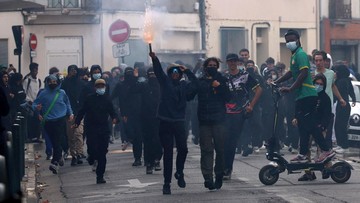
Imagine your morning routine altered by decree. The teachers sent home, the classrooms locked, and the flag out of the front gate because the students inside refused to sit quietly. That is roughly what happened across France on Friday (1/10), when authorities in at least 400 schools nationwide decided to shut down classes amid a wave of demonstrations that had run for days. What started as a student complaint quickly turned into the largest coordinated protest movement in French classrooms in recent years.
For ordinary families, the closure is not an abstract political statement. Parents who work shifts had to scramble for childcare, students who rely on school meals lost access, and exams scheduled for that week were pushed back. Yet the disruption also revealed something structural: the French education system, once celebrated for its centralized discipline, is now one of the most contested political arenas in Europe.
Kenapa Demo Ini Terlihat Mendadak?
The protests did not appear out of nowhere. Movement organizers had been building networks through messaging apps and social media platforms for weeks, sharing flyers, videos, and legal guides about the right to demonstrate. On the ground, the demonstrations involved students blocking entrances, chanting in schoolyards, and in some cases staging walkouts that lasted until teachers or administrators agreed to talk.
Kami bukan melawan sekolah. Kamiagainst sistem yang tidakeger Listen,"))ucap seorangffeejuna mahasiswa yang参阅 participate in the action, as quoted by several media outlets covering the demonstrations.
The scale matters. A closure in one town is a local dispute;400 closures coordinated across regions suggest a synchronized movement. Analysts describe the pattern as similar to a ripple effect: one school decides to strike, neighboring schools follow to avoid feeling isolated, and district authorities eventually step in to stop the spread.
Keluhan yang Sebenarnya: Sistem yang Terlalu Ketat
At the surface, the students protest specific policies. Underneath, the grievance is deeper: dissatisfaction with how rigidly the French system is administered. The sistem pendidikan in France is famous for its centralization. School calendars, curriculum standards, and grading are largely decided in Paris, leaving schools themselves with limited room to adapt.
The demonstrators argued that during the pandemic era, when lessons moved to streaming platforms and hybrid learning (a mix of in-person and online classes) became normal, the government had grown too reluctant to restore flexibility. Students complained about mandatory attendance rules, packed schedules, and limited autonomy for teachers to decide how classes should run.
Aspek Sebelum Protes Saat Protes Sekolah yang tutup Tidak ada Massage Lebih dari 400 sekolah Durasi aksi Belum terkoordinasi Berlangsung beberapa hari berturut-turut Respons pemerintah Dialog terbatas Penutupan sekolah dan、建立guards Media sosial Informasi tersebar Koordinator grassroots (bottom-up) Dampak Ripple: Fame and
School closures are the most visible tool authorities have, but they are also the most costly. A closed school is not just a canceled lesson; it means security staff, parental leave, lost meals, and pressure on local governments. The ripple effect reaches beyond the affected schools: nearby schools often absorb students whose classes were suspended, creating overcrowded corridors and longer commutes.
Education researchers warn that repeated disruptions carry an academic price. Students from lower-income households, who often lack stable internet access or a quiet study space, are hit hardest. In effect, the protest of one group risks widening the gap between those who can catch up at home and those who cannot.
Reaksi Publik dan Politisi
The response from policymakers has been mixed. Some officials defend the closures as necessary to protect exam integrity and prevent violence during demonstrations. Others argue that dialogue would have been cheaper and more productive. Parent associations, meanwhile, have mostly appealed for calm and for schools to reopen quickly so students can prepare for national assessments.
The episode also puts pressure on the broader conversation about inovasi in education. If digital tools can keep classes running during a health crisis, critics ask, why does the system fall apart when students simply refuse to attend? The answer lies partly in institutional culture: France's model prizes conformity and uniform rules, while the students pushing for change are demanding participation and adaptability.
.signal untuk峪global
What happens in Paris classrooms often travels. Neighboring countries have faced similar youth protests over tuition fees, climate policy, and education funding, and each new cycle inspires organizers elsewhere. For technology observers, the demonstrations are a case study in how platforms reshape collective action: a ekosistem of messaging tools, short video, and hashtags turned scattered frustration into synchronized action within days.
Whether the closures succeed in forcing a policy reversal remains unclear. But the episode offers a reminder: when institutions lose touch with the people they serve, disruption becomes the fastest way to be heard. And in a system built on rules, students have discovered that breaking the rules is sometimes the only form of disrupsi left.








Comments (0)