 suwandi-tan
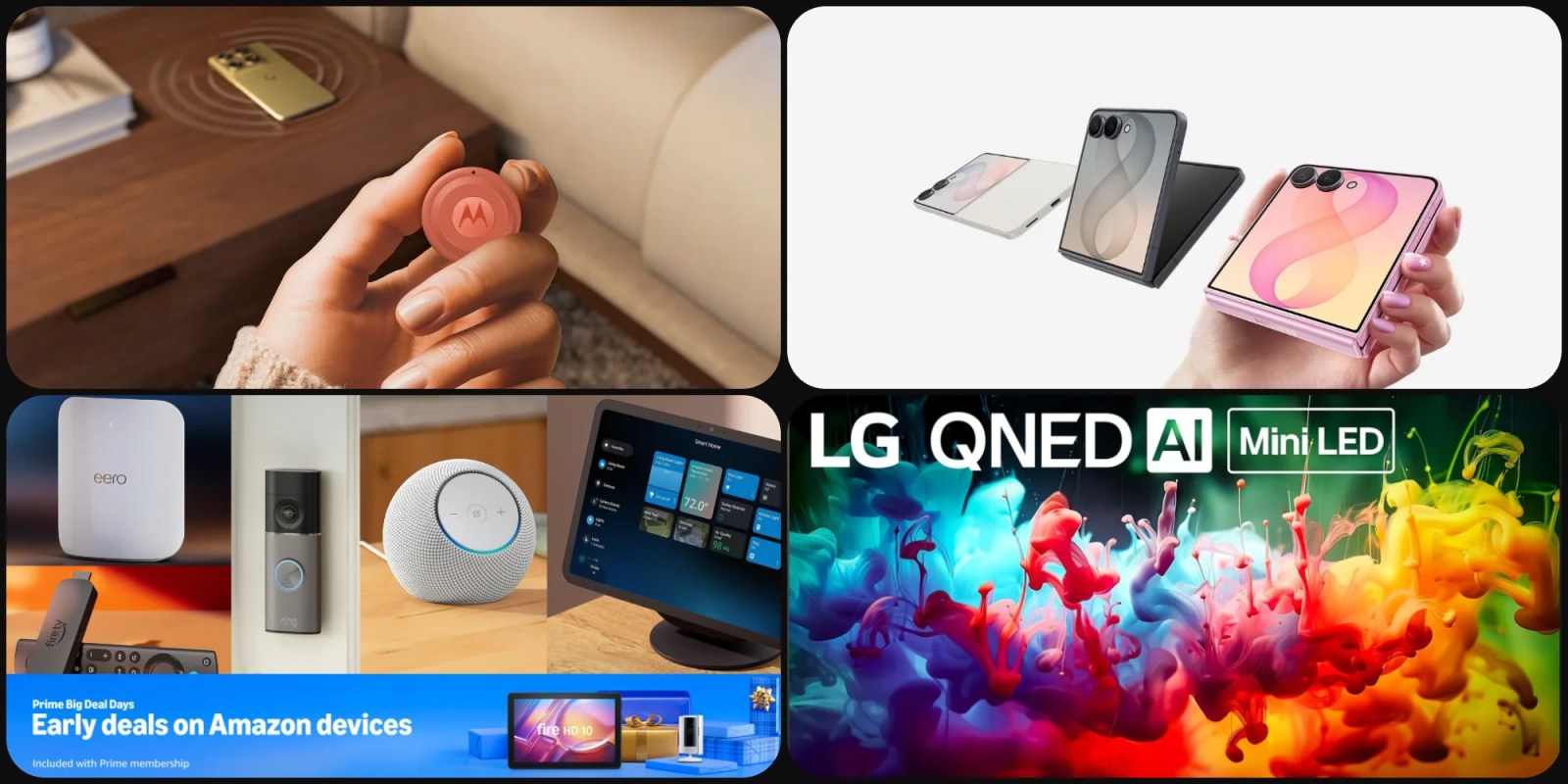
Kalau Anda sedang menunda pembelian gadget,+Momen ini justru bisa menguntungkan. Finale diskon musim gugur yang berlangsung awal Oktober brings dozens of devices—from tiny Bluetooth trackers to foldable phones and premium televisions—entering price ranges rarely seen outside major campaigns. For ordinary users, this is the moment when a high-spec device that normally feels “too expensive” suddenly fits into a mid-range budget. Below we break down the discounts that matter most, complete with an explanation of what each technology actually does and why the price drops matter.
Moto Tag 2, the Android tracker, drops to $17.50
The headline deal is the newestMoto Tag 2, a small coin-sized tracker designed for theAndroid Find Hub Network (a crowd-sourced location-finding system that works the same way as Apple's Find My network). Attach it to keys, a wallet, a backpack, or a pet collar, and you can locate the item through your phone. Technically, the tracker relies on Bluetooth Low Energy (BLE) broadcasting a rotating identifier signal; nearby phones then quietly report the location back to the cloud, so the object doesn't need to be connected to a cellular network or satellite.
The price structure is simple: $20 for a single unit, or $70 for a four-pack, which works out to $17.50 per piece—a much better deal if you're planning to tag multiple items at once. Ibarat seperti subscribing to a package-tracking service that you actually own, rather than paying rental fees every month. For families or people who frequently lose keys and bags, buying a pack of four at $70 is arguably the more rational purchase.
Galaxy Z Flip 8 returns to its lowest price ever
Second on the list is Samsung's Galaxy Z Flip 8, the latest clamshell-style foldable smartphone. Its selling point remains the folding screen: a large display that closes in half, making the device dramatically more compact when folded than a conventional slab phone. Foldables used to be criticized as expensive curiosities with fragile hinges, but steady improvements in hinge durability, crease reduction, and chip efficiency have pushed them into the mainstream.
The flip model is now hitting$150 off, landing at its lowest recorded price. Interestingly, the open-box variant—which means a unit returned to the seller or repackaged after inspection—carries discounts of up to $375. Open-box goods aren't “second quality” by definition: they are typically unused or barely used items whose packaging was damaged or which were returned within a short return window. The caveat is warranty paperwork, so buyers should check whether the guarantee transfers intact.
LG mini-LED TVs cut by up to $1,200
Home theater enthusiasts get their own headline: up to $1,200 off on the newestLG mini-LED televisions. Many people assume OLED (Organic Light Emitting Diode) panels are the summit of image quality because each pixel emits its own light, producing perfect blacks. Mini-LED works differently: it keeps a conventional LCD (Liquid Crystal Display) panel, but replaces standard edge-lit LED backlighting with thousands of microscopic diodes behind the screen.
The practical result is higher peak brightness and far more precise local dimming—regions of the screen can be dimmed independently—which is exactly what HDR (High Dynamic Range) content needs. In plain terms, if OLED is like a lamp you can only dim as a whole room, mini-LED is a lamp with individual switches per bulb. Several models in this lineup are also bundled with free NFL season access, adding streaming value on top of the price cut.
Echo speakers, Echo Show, and a touchscreen Chromebook
Amazon's smart home lineup is heavily discounted too: Echo smart speakers at up to 50% off and Echo Show smart displays at up to $100 off. The Echo Show models add a small screen, making them useful for timers, video calls, kitchen timers, or checking camera feeds from home devices. AI (Artificial Intelligence/kecerdasan buatan) features like voice assistants and routines are now standard in this ecosystem, so discounts of this magnitude make smart-home adoption considerably cheaper.
For students and workers, the day's standout is a HP Chromebook Plus with a 2K touchscreen, recorded at its lowest price to date. A Chromebook runs Chrome OS, a lightweight operating system built around web apps and cloud storage, which explains its long battery life and fast startup. The “Plus” tier typically means a higher-resolution2K panel (roughly 2,560 x 1,600 pixels), a touchscreen for stylus or finger input, and more RAM (Random Access Memory) than a basic model—ideal for note-taking, document work, and video calls.
Why timing your purchase actually matters
There is a practical lesson behind this wave of discounts: gadget pricing is not fixed. Brands set list prices, but actual transaction prices move constantly based on sales cycles, inventory, and retailer competition. Devices that appear “expensive” during quiet months can become genuinely affordable when a major event approaches.
That said, buyers should stay skeptical. Not every discount is a real bargain, and “lowest price ever” claims are frequently marketing language. Smart approach: compare prices across multiple retailers, check the actual specifications, and read user reviews before checkout. And when a deal is genuinely steep, the hardest part isn't evaluating it—it's resisting the urge to buy things you don't need simply because they're cheap.












Comments (0)